
- Published:
- Thursday 10 September 2026 at 3:14 pm
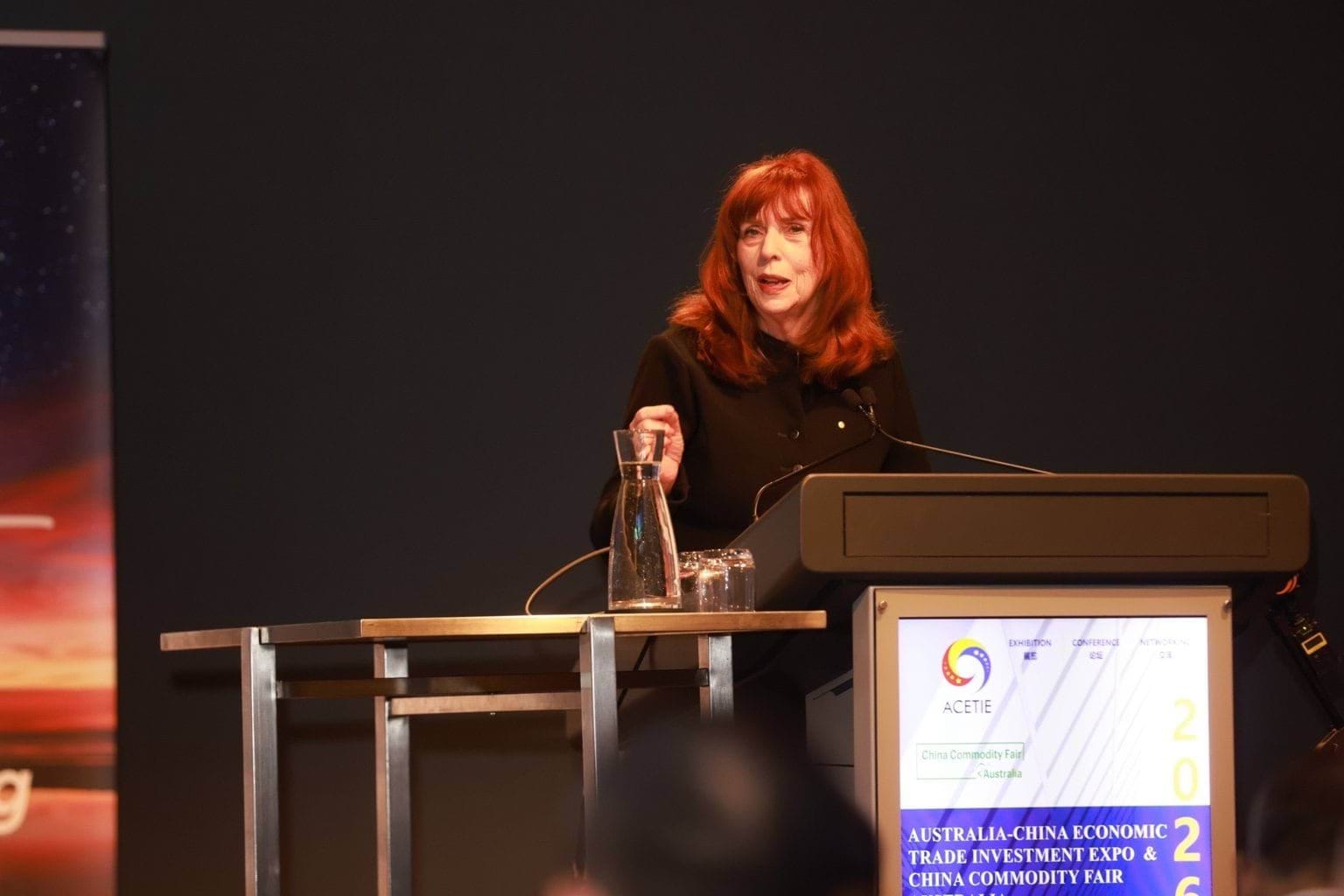
I begin by acknowledging the Traditional Owners of the lands on which we meet, the Wurundjeri people, and pay my respects to their Elders, past and present.
Good morning.
It is a pleasure to join you for the 2026 Australia-China Economic, Trade and Investment Expo.
Introduction
To everyone who has travelled from China and elsewhere, welcome to Melbourne.
We are very glad to have you with us.
I received a very warm welcome on my Official Visit to China earlier this year.
It is a pleasure to reciprocate that welcome here in Victoria today.
Though this Expo is looking to the future, I would like to look at its development from the first decade of this century.
This century has marked a new era of prosperity between Australia and China.
Two-way trade between our nations increased almost threefold between 2001 and 2007 – the latter being the year that China became our largest trading partner.
Political commentator George Megalogenis described this growth as “one of the great exchanges of human history.”
It was an exchange spurred on by the resources and higher education sectors, or – as he phrased it – one forged in “the quarry and the campus.”
Our economic relationship is still understood through this lens in the popular imagination.
But that view does not tell the full story.
In my recent travels through Hong Kong, Nanjing, Suzhou, Shanghai and Chengdu, I met with many people whose work connects our two countries today.
They are engineers and educators – but they are also health professionals, business leaders, researchers, artists and agriculturalists.
Our trade relationship today is as robust as ever.
But it is also as diverse, dynamic and innovative as it has ever been.
Historical Victoria-China connection
Next year will mark 55 years since the establishment of diplomatic relations between Australia and the People’s Republic of China.
Yet our State’s connection with China reaches much further back.
It began when Victoria itself was only a few years old.
By 1859, more than 40,000 Chinese migrants were living in Victoria.
They made up around one in five men on the goldfields.
They established businesses, formed communities and helped shape towns across Victoria, including the town of Bendigo, one of the great centres of the gold rush.
From its earliest years, Chinese residents supported Bendigo’s Easter Fair, donating goods and money for the local hospital and people in need.
Over time, their contribution grew into one of the Fair’s great traditions: a Chinese procession of music, costumes and dragons.
And when Bendigo celebrated its 150th Easter Fair in 2022, that tradition was still going strong.
Last year, I was fortunate enough to see this for myself on a visit to Bendigo’s Golden Dragon Museum.
The museum tells the story of the city’s Chinese community and is home to Dai Gum Loong, the dragon that appears in the Easter parade.
It would be remiss of me not to mention here the late Russell Goldfield Jack AM – the Museum’s founder, who was farewelled last month at a State Funeral Service.
Russell stands out as a remarkable community leader who contributed much to this cultural exchange between our nations.
And if you ever find yourself in Bendigo, the Museum he founded is well worth a look.
Contemporary Victoria-China connection
As it happens, exactly a century after Bendigo’s Chinese community became a major part of the Fair, Victoria and Jiangsu Province established a sister-state relationship.
It was a first for both: Victoria’s first sister-state relationship, and Jiangsu’s first with an overseas partner.
The partnership was later added to with one from Sichuan Province, making Victoria the only Australian state with two sister-state relationships in China.
But these relationships are more than agreements on paper.
They bring people and organisations together in practical and meaningful ways.
Over the decades, many have moved between our countries to build homes, careers and businesses.
Australian companies have built partnerships and found customers across China, and trade between our countries has expanded enormously.
Chinese Australians too have made lasting contributions to business, medicine, law, education, the arts and public life.
Today, almost 430,000 Victorians have Chinese ancestry and more than 300,000 speak a Chinese language at home.
Chinese is also the most studied language in Victorian government schools, accounting for almost one in five language enrolments.
Official Visit to China
During my visit to China, I saw the work of those partnerships firsthand.
In Nanjing, I saw the work of engineers at Kangni Mechanical and Electrical, helping rail networks carry people safely through cities around the world – and now providing their tech into our Melbourne tram system.
Later, at the Melbourne-Nanjing Sports Rehabilitation Centre, I learned how Victorian and Chinese expertise is coming together to help people recover from injury and get moving again.
In Suzhou, I visited Basecare, a medical technology company founded by a University of Melbourne alumnus and specialising in reproductive genetic testing.
And in Shanghai, I met the people behind Vic House, who are helping Victorian businesses reach Chinese customers.
But it is my final engagement on that visit that I would like to reflect on.
On the final afternoon of my visit to China, I went to the Dujiangyan Irrigation System in Sichuan, part of a UNESCO World Heritage site.
There, I learnt how generations of farmers had relied on the Min River to water their crop which, when it flooded, could also destroy their fields as well as their homes.
I was shown how, more than 2,000 years ago, engineers and builders divided and directed the river.
They cut a channel through the mountain to carry water to the fields, all without building a dam across the river.
To this day, the system helps prevent flooding and supplies water to hundreds of thousands of hectares of farmland.
Standing in that glorious landscape, watching the water move through a system built more than two millennia ago, it was impossible not to be in awe of what they had achieved.
Looking forward
Clearly, China has a deep history of problem-solving – and our relationship is only a small part of that long trajectory of innovation.
Yet it continues to flourish and grow.
I began by reflecting on the era of prosperity that emerged two decades ago.
In 2007, when China claimed the title of Australia’s largest two-way trading partner, it did so with trade worth $58 billion.
Today, that number is $326 billion.
We find ourselves in another era of great exchange.
But it is no longer confined to the quarry and the campus.
It is an exchange taking place in factories and farms, in stadiums and theatres, in laboratories and design workshops.
And we all benefit as a result.
Because trade is not a zero-sum game.
When trade works well, both countries benefit.
And when we share new ideas and new ways of doing things, it is everyday people whose lives change for the better.
That is why this Expo matters.
Conclusion
Over the coming three days, products will be examined, ideas tested and questions asked.
Some of you will find a new customer, investor or partner.
And some of the most important outcomes may begin with nothing more than a simple hello or a friendly Nǐ hǎo.
That is how the relationship between Australia and China has always grown – and Victoria has always benefited from being at the forefront.
That was true when those early cultural ties were forged on the goldfields.
It was true when Victoria created sister-state relationships with Chinese provinces in 1979 and then again in 2016, and in our contribution to the great exchange of people and skills in the years between.
And it remains true today as our State, our businesses and our institutions stand ready to innovate and solve the problems of tomorrow.
That next part of the story is up to you.
And I look forward to seeing what you make possible.
Thank you.
Updated