

- Published:
- Tuesday 18 August 2026 at 4:47 pm
I begin by acknowledging the Traditional Owners of the lands on which this building stands – the Wurundjeri people of the Eastern Kulin Nation – and pay my respects to their Elders, past and present.
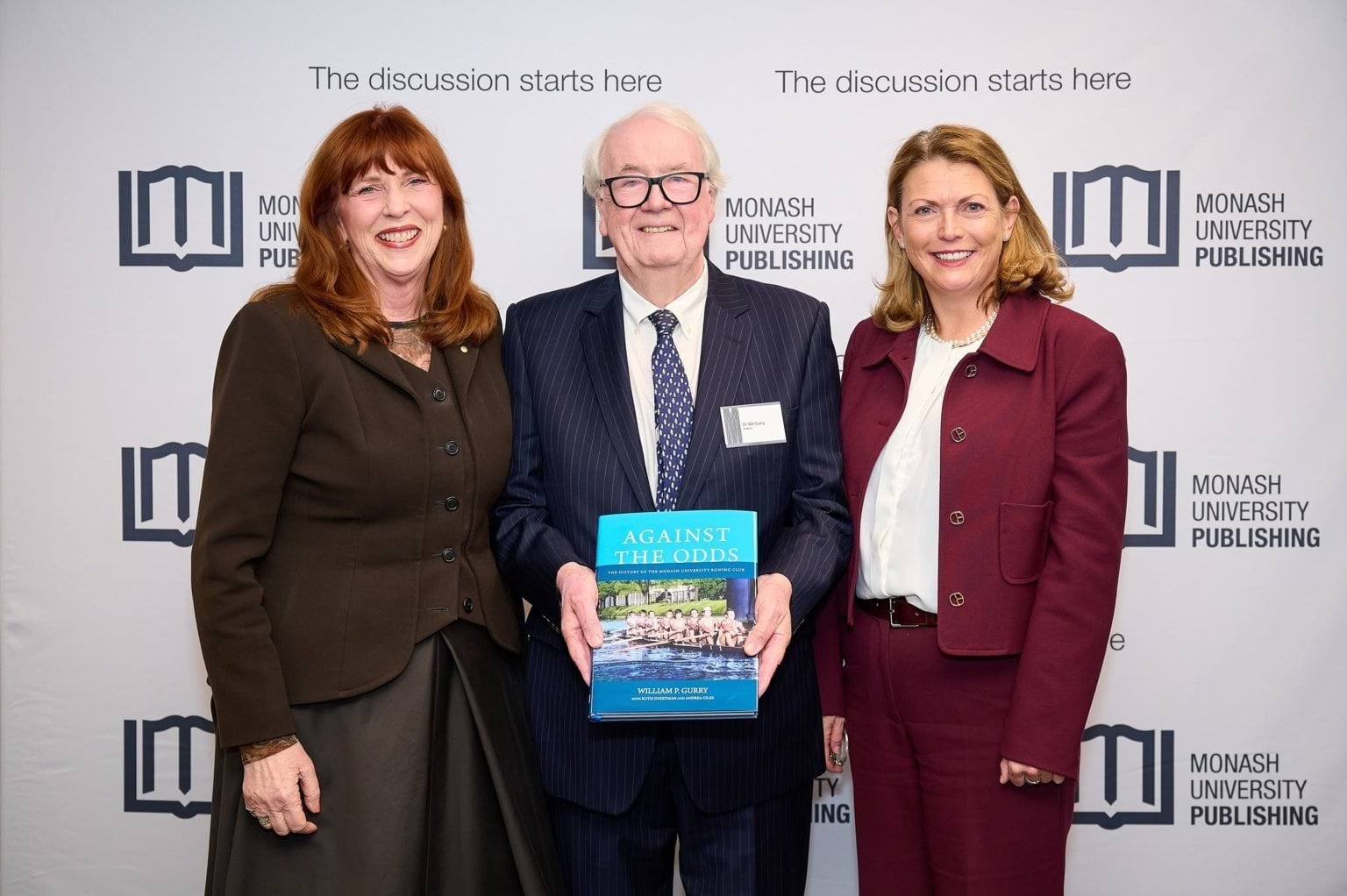
It's a great pleasure to join you for the launch of Against the Odds.
Looking around the room, it’s lovely to see many familiar Monash faces.
After nine years as Vice-Chancellor, I thought I had learnt almost everything there was to know about the University.
So, it is a pleasure to admit that this book has taught me something new: the story of Monash as seen from behind the oars.
The book takes us back to a club formed while the University itself was still taking shape.
The Clayton campus was a good 20 kilometres from any rowing facilities.
In those early days, our State’s higher education institutions were often referred to by their colloquial nicknames.
The University of Melbourne was known as ‘The Shop,’ RMIT was ‘The Tech’ and Monash was ‘The Farm’.
Which tells you something about the challenge of starting a rowing club at Clayton: plenty of paddocks, but not a river in sight.
In 1962, the University Registrar worried that rowing might distract students from their studies and advised those involved to “make haste slowly”.
The students did not take the hint.
The Monash University Rowing Club was established the following year and, within its first decade, had won three intervarsity championships.
The Monash University Women's Rowing Club followed in 1973, and today women and men row together under one banner.
The club’s record, of course, speaks for itself.
But when former members look back, many remember the lessons they learnt while rowing just as clearly as the races.
As a rower myself, although not as accomplished as many in this room, I can understand why.
Rowing demands strength and endurance.
But individual ability will only take a crew so far.
Each rower must match the rhythm of the people around them and trust that everyone will keep pulling – even when it hurts.
Perhaps that Registrar understood rowing better than he realised.
Because to move quickly, a crew cannot afford to rush.
Every stroke needs to be controlled and precisely timed.
They must, in fact, make haste slowly.
Clubs like this also give students something that can be harder to measure than any race result: they give them a place where they belong.
These days, students can be connected to hundreds of people online while still feeling isolated from those around them.
A rowing crew offers something very different.
There is no way to remain anonymous in the boat – you are seen and you see others (even if from the back).
Each person's effort matters. Others depend upon them, and they have to be prepared to depend upon others in return.
Those experiences build friendships that can last forever.
And that is partly why preserving the history of a club like this matters.
A club's story can so easily disappear into old photographs, race results and stories exchanged among old friends.
Everyone who contributed to this book has helped make sure this history won’t disappear.
They have preserved not only the victories and setbacks, but the people, friendships and memories that gave the club its character.
Thank you for giving that history a permanent home.
This book is a reminder that a university is shaped not only by its degrees and education, its research or its buildings.
(And, not by its Vice-Chancellors either.)
It’s shaped by its students: by the friendships they form, the communities they create.
In 1963, the students who established a rowing club on ‘The Farm’ could not have known that, more than sixty years later, we would be gathered here to celebrate its history.
But against the odds, here we are.
Thank you.
Updated