

- Published:
- Saturday 20 December 2025 at 9:06 am
I want to acknowledge the traditional owners of the land on which we are gathered – the Bunurong people of the Eastern Kulin Nation – and pay my respects to their Elders, past and present.
I also want to acknowledge past and present members of the Australian Defence Force with us today – and thank you for your service.
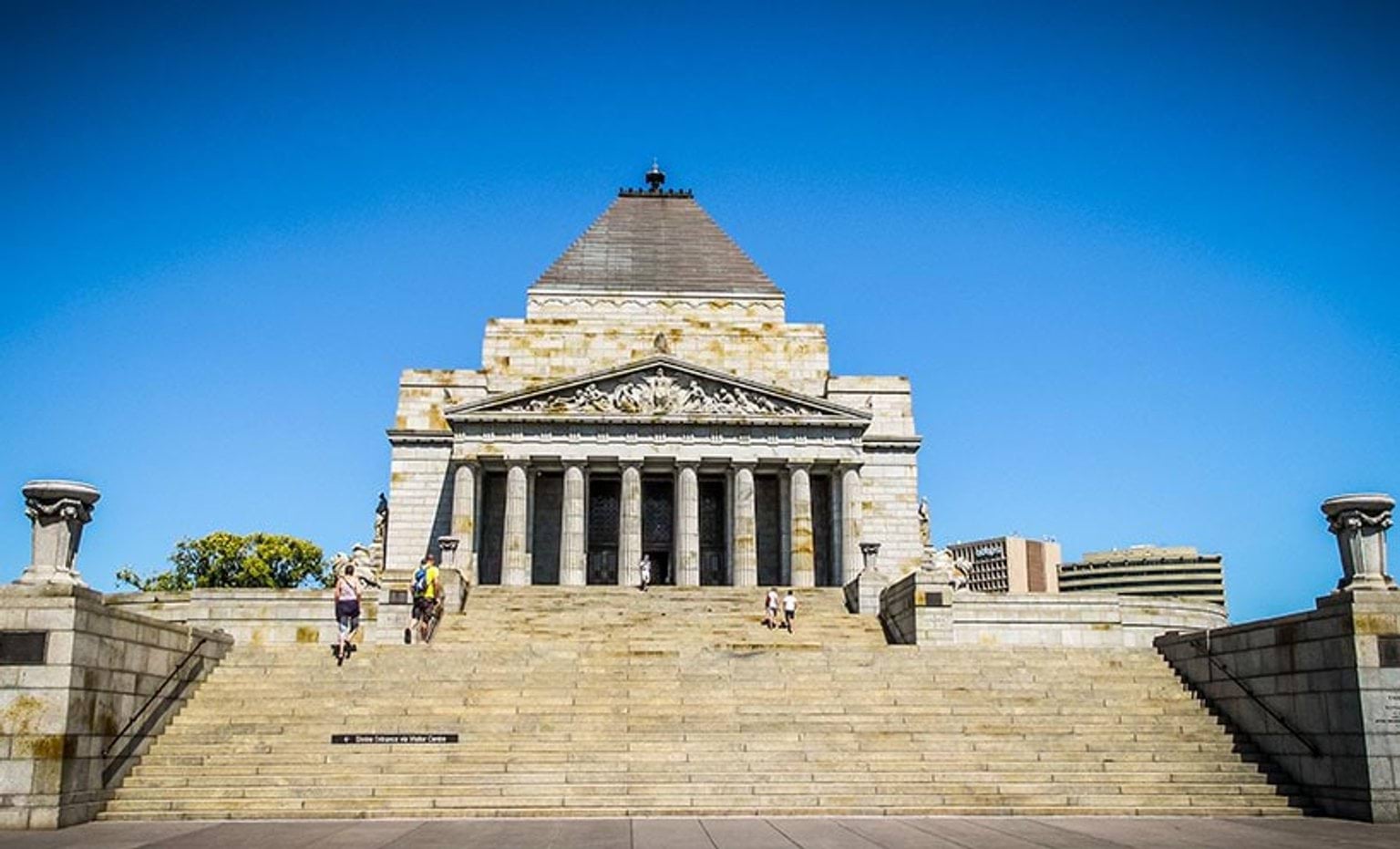
The Shrine of Remembrance is sacred ground.
And this Sanctuary is the most sacred part of this most sacred place.
Look at the words carved into the Stone of Remembrance:
‘Greater Love Hath No Man.’
The full quotation – taken from the Book of John in the New Testament – is as follows:
‘Greater love hath no man than this, that a man lay down his life for his friends.’
Every Remembrance Day – on the eleventh hour of the eleventh day of the eleventh month – a ray of sunlight falls upon one of those words:
‘love’.
That’s no mistake.
Dr Joseph Baldwin – the Government Astronomer – churned through 144 pages of calculations to ensure the opening in the ceiling, which is closed for 364 days of the year, was in the correct position so that ‘love’ would be illuminated at that precise moment for the next 5,000 years.
That is how much care went into the construction of this place.
That is how important the Shrine was – and is – to the people of Victoria.
It’s important to remember how this sacred place came into being.
In 1918, when the First World War was still being fought, the first discussions were held about the creation of a place to commemorate the fallen.
After the War, the funds to build this Shrine were raised through public donations – with pounds and shillings pouring in from rich and poor, young and old, city and country.
Those donations were an expression of collective grief – which is an expression of love.
And love is what this Shrine is all about.
Down the generations, tens of thousands of Australians have served and died for love of their friends and family … for love of their country and its freedoms … and for love of a future they never lived to see.
Today, we are standing in sanctuary of a future made possible by their sacrificial love.
All of which brings me to Gallipoli – and today’s 110th anniversary of the evacuation of the Anzacs.
Gallipoli was not Australia’s first conflict;
That generation was not the first – nor the last – generation asked to make the ultimate sacrifice;
And they only spent 238 days on the beaches and bluffs of Gallipoli.
Why, then, has the story of Gallipoli – a lost campaign against a fierce foe that has since become a firm friend – become a national legend?
I suspect the answer lies in the heights of the sacrifice given and the depths of the grief experienced.
No Australian generation – before or since – has given more than that generation; …
.. which is another way of saying that no generation has shown greater love for kin and country – and the promise that is Australia.
As Charles Bean – the official historian of the Anzacs – wrote in the concluding pages of his second volume on the Dardanelles campaign:
‘There were few people in Australasia of whom some near relative or close friend did not lie on those hillsides … Anzac now belonged to the past, and during the war all energy was concentrated on the future; but the influence of the Gallipoli Campaign upon the national life of Australia and New Zealand had been far too deep to fade.’
Lest we forget.
Updated