

- Published:
- Monday 16 November 2026 at 1:30 pm
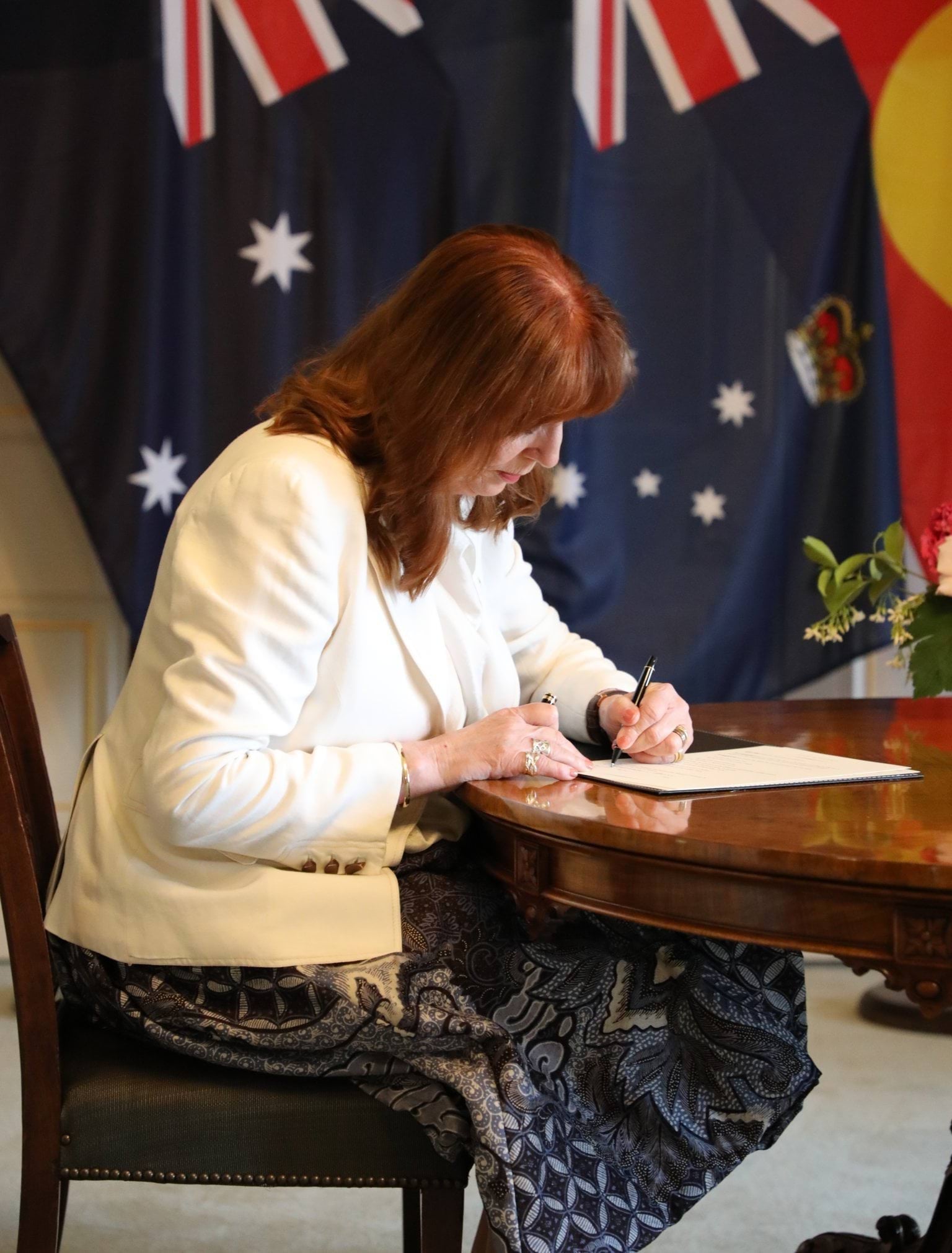
The main responsibility of the Governor is to oversee the workings of the government of the day to ensure that it acts within the boundaries of the Victorian Constitution and the rule of law. It is important that the Governor remains apolitical and impartial. Therefore, the Governor, by convention, does not vote in elections.
In our democratic system, the Governor must give approval for the holding of elections. In 2003, the Victorian Constitution was amended so that Members of Parliament serve four-year terms and elections occur on the last Saturday in November of the fourth year.
The Governor issued writs for elections to the Legislative Assembly and the Legislative Council on 3 November 2026 – the day on which the Legislative Assembly expired – setting the date for an election on 28 November 2026.
After the election, the Governor will appoint a government by commissioning a Premier and Ministers. By doing so, the Governor plays a central role in our democratic system by ensuring the orderly transition of power from one government to the next.
If the incumbent government is defeated in the election, conventions informed by the Westminster system see the existing Premier and Ministers continue on a caretaker basis until a new government is appointed. In this way, Victoria is never without a Premier or a government.
The Victorian Constitution (s 51) provides that a minister can hold office for up to 3 months without being an MP. This means that a Premier or a Minister who has failed to win their seat in an election can continue in office for 90 days. This is particularly relevant if a Premier or a Minister is defeated and remains in office in a caretaker capacity while a new government is formed. Where a Premier is defeated in an election, convention requires they advise the Governor to call on the leader of the political party with the most seats in the Legislative Assembly to form a government. The defeated premier will then tender their own resignation and the resignation of their ministers. By doing so, a defeated Premier resigns their government. Ordinarily, the Governor accepts the resignations and appoints a new government at the same time.
Before such an appointment is made, however, an MP who is usually the leader of the political party with the most seats in the Legislative Assembly (the Premier-elect) must assure the Governor that they have the confidence of a majority of MPs in the Legislative Assembly. If satisfied, informed by convention, the Governor will accept the advice of the Premier-elect and commissions them to form a government.
Only upon the appointment of a new Premier (via a formal commission) is the resignation of the defeated Premier effective. The new Premier and the Members of Parliament nominated by him or her to be ministers are then each appointed by the Governor as part of the new government.
Within three weeks after Election Day, after all results are declared, the Electoral Commissioner will return the writs to the Governor of Victoria. The writs include the names of the elected candidates in both houses of Parliament. In this way, having approved the dissolution (ending) of the Parliament, the Governor then approves the constitution of the next Parliament.
Updated