

- Published:
- Tuesday 5 May 2026 at 11:28 am
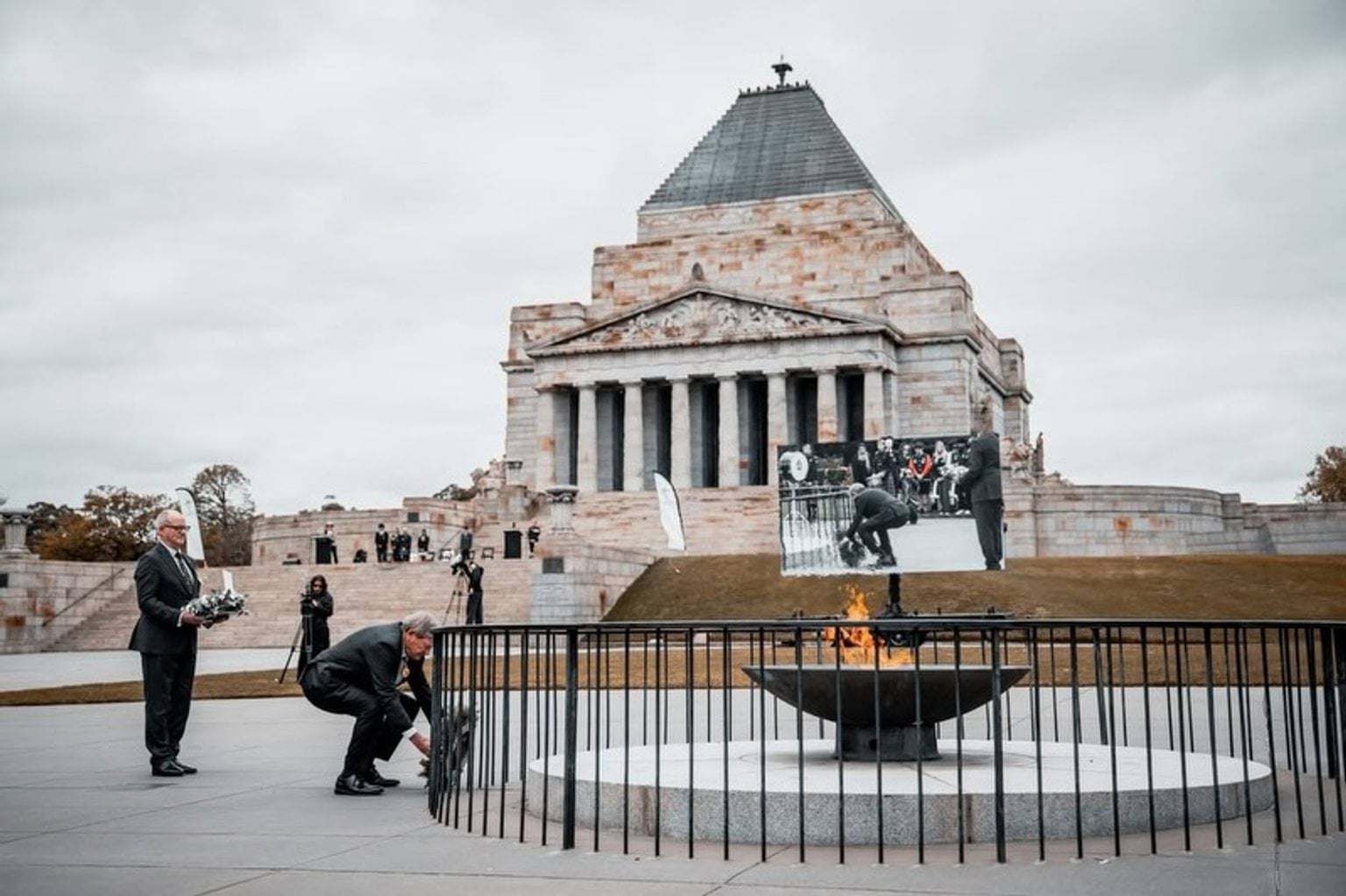
I begin by acknowledging the Traditional Owners of the lands on which we are gathered – the Bunurong people of the Eastern Kulin Nation – and pay my respects to their Elders, past and present.
I would also like to acknowledge and thank Bunurong Elder Uncle James for his welcome and Ganga Giri for his Yidaki performance this morning.
It is a pleasure to represent Her Excellency Professor the Honourable Margaret Gardner, Governor of Victoria, at today’s ceremony.
One hundred and ten years ago, on 25 April 1916, Australians marked the first Anzac Day – commemorating one year since the landing at Gallipoli.
The Gallipoli campaign was not Australia’s first military conflict, and at the time many of our soldiers were still fighting on the Western Front as World War I continued.
Yet the landing was a moment of such significance that Australians felt compelled to recognise it only 12 months after it had taken place.
The newspapers in 1916 described that first Anzac Day as “…a day that will live in our hearts and in our history as long as Australia lasts.”
It has been observed every year since.
Across time, much has changed for Australia and its people – as has our understanding of what the day represents.
Now we reflect not only on the sacrifice of those who fought in Gallipoli, but on all those who have served our nation across all conflicts and peacekeeping missions.
We acknowledge not only their service in conflict, but also the impact it has on their families, as well as on the soldiers themselves.
The last surviving Anzac passed away in 2002, and yet this commemoration remains of profound importance to our national identity.
In understanding how, it is worth considering why that first Anzac Day felt so significant.
The impact of World War I – and the Gallipoli campaign in particular – was deeply shocking for the new nation of Australia, which had a population much smaller than that of today.
Of our five million people at the time, more than one in twenty people were sent overseas during the war.
Of those who served, more than half became casualties, and of those casualties, one in four died.
That scale of loss may be hard for us to imagine now.
It is unthinkable in part because of the freedoms we enjoy today –
…as well as the privilege we have of living in a peaceful country where we do not experience the devastation of war.
For younger Victorians – all of you here today – we cannot just assume you will absorb these understandings if we do not talk about why they are important.
I commend the work of Legacy to ensure these stories continue to be told, thereby sustaining their meaning.
Soon, the Last Post will play at today’s ceremony.
The silence that spans that final call of the bugle to when it is broken with the rouse is a personal moment of reflection.
You might reflect on the bravery and sacrifice of those Anzacs who landed on the Gallipoli Peninsula back in 1915…
…or the contribution of someone you know who has served, or is serving, in the Australian Defence Force…
…or your gratitude to be in a country where the service of those people means that we live in peace and security.
You may reflect on any of these matters – or a combination of them.
But whatever you reflect on, know that your participation in this ceremony continues a sacred tradition – one that still lives “…in our hearts and in our history.”
It is a tradition sustained for 110 years, and one you will carry into the future.
Lest we forget.
Updated