

- Published:
- Thursday 20 August 2026 at 9:58 am
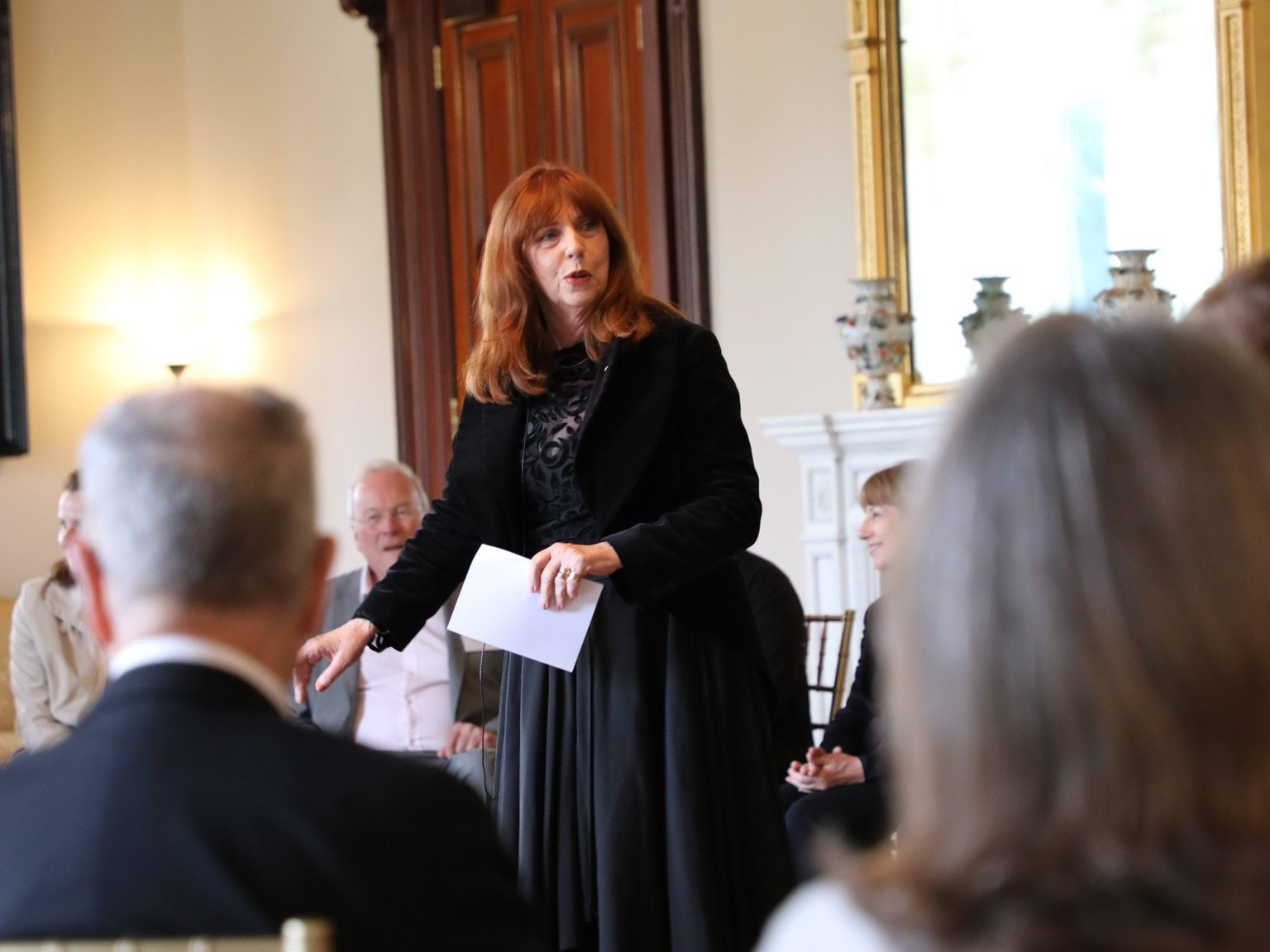
I begin by acknowledging the Traditional Owners of the lands on which this House stands – the Wurundjeri and Bunurong people of the Eastern Kulin Nation – and pay my respects to their Elders, past and present.
Today’s Understanding Victoria discussion is a little different – a departure – from those we have held previously, because it comes at an important moment in the history of Government House.
This year marks 150 years since Sir George Bowen, Victoria’s fifth Governor, and his family became the first occupants of this purpose-built Government House.
And next month is the anniversary of the first official function that marked the opening of Government House – the Queen’s Birthday Ball of 1876.
In a space so frequently used to commemorate significant anniversaries, it is only right that this House mark one of its own.
Later this year, a volume of 12 chapters edited by Philip Goad and Andrew May, addressing the physical and social history of Government House, Victoria, will be published.
The volume explores many aspects of the history of this House.
First – and the focus of today’s discussion – is the architecture, the landscape and the interiors of the House in its domain.
A second aspect, which will be discussed in the final session of this series this year, looks at the social and political history of the House – particularly from the twentieth century until the present day.
Our purpose today is not to preview the book.
Rather, it is to consider the circumstances and choices that shaped this House, and the place it has become.
Today’s discussion is also a departure for another reason.
Previously in these discussions, when we have reflected on the history of our State, we have had to imagine the places in which those influential decisions were made.
Today we sit within it.
Looking around, you get a real sense of the ambition of ‘Marvellous Melbourne’ that inspired its construction.
It is, as one former Premier who was here recently described it, a place that is ‘quintessentially Victorian.’
And you can feel the weight of the countless events and conversations that have taken place within these walls.
It is, of course, still the Governor’s residence and it remains a working House.
That does mean I have very little excuse to be late for work.
But it is in this very room that the leader of the world’s largest democracy – Narendra Modi – was hosted just last month.
And it was right here where the first Ministry of the 50th Premier of Victoria was sworn just a few weeks ago.
Next week, this space will be abuzz as we host Order of Australia investiture ceremonies and welcome hundreds of recipients and their guests.
In doing so, it continues a proud tradition of celebrating the contributions of the people of this State.
Is this what had been envisioned all those years ago when this domain was set aside for a Government House?
That this building and its grounds were established here, in the way that they were, did not happen by chance.
The journey from land selection to design to decision and construction was not straightforward.
At each step of the way there were deliberate considerations and decisions that ultimately led to the place we gather in today.
How was it then that Victoria ended up with the largest Government House in the nation, and one of the grandest in the Commonwealth – and why was it the last Government House to be purpose-built?
What were the dominant factors, both local and colonial, that shaped the decisions about this Government House and its domain?
How much was determined by its plan, its time, its purpose or budget-driven?
How have the attitudes of Victorians influenced its key features and functions over time?
Some of the answers to such questions are well documented, others are not.
Today’s discussion is a chance to delve into them and gain a deeper understanding of this fine House and its place in the fabric of our State.
In looking back, we are also contributing to the history of this special place and all the stories it carries forward.
I want to extend my gratitude to speakers Professor Phillip Goad, Richard Aitken, and Dr Robert La Nauze for generously sharing their expertise in addressing these questions.
And of course, thank you to the Honourable Maxine McKew for facilitating today’s discussion.
Thank you.
Updated