

- Published:
- Thursday 23 April 2026 at 3:12 pm
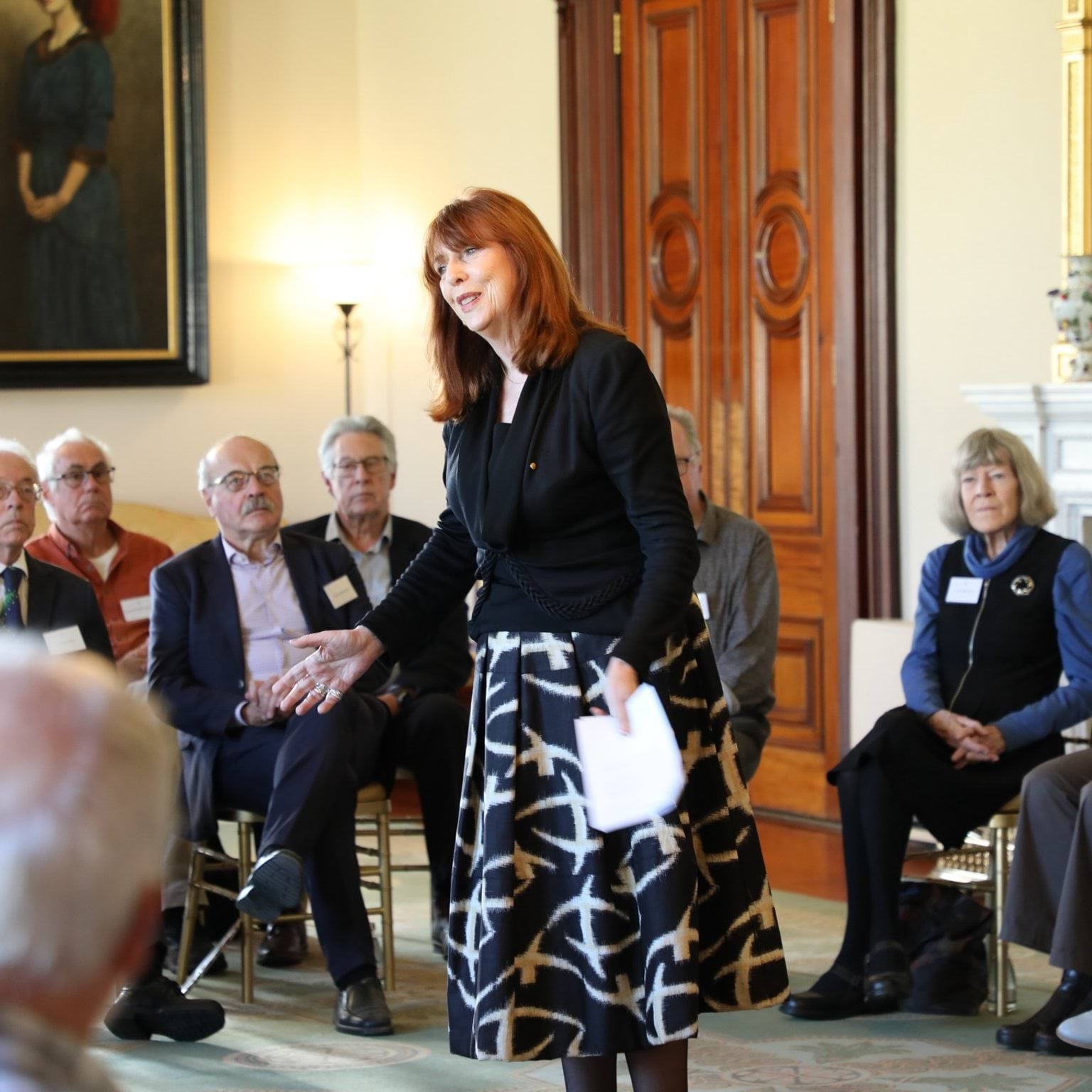
I begin by acknowledging the Traditional Owners of the lands on which this House stands – the Wurundjeri and Bunurong people of the Eastern Kulin Nation – and pay my respects to their Elders, past and present.
Welcome to this year’s first instalment of the Understanding Victoria discussion series.
Today we explore the path that led to the creation of Victoria as a separate colony.
In doing so, we will grapple with the idea of Victorian exceptionalism.
It’s fitting we do so in what is undoubtedly a testament to Victoria’s large ambitions.
Whether you were born here, or – like me – have since adopted the status of being a Victorian, we rarely reflect directly on where Victoria’s creation fits in the broader “Australian” story of colonial settlement.
The title of today’s event – ‘[S]eparation at last!’ – was printed across the front page of the Melbourne Herald on 11 November 1850, when news of the passing of the Separation Bill arrived in the Port Phillip District.
Evidently, the reaction to this ‘glorious news’ was felt widely.
A week of celebration culminated in a procession that was said to have been attended by more than half of Melbourne’s population at the time.
Only months later, the people had their wish granted – Victoria was formally proclaimed a colony on 1 July 1851, along with responsible government and a bicameral parliament.
What drove the campaign for Separation?
And what marks did it leave on the colony that emerged?
The campaign for Separation, involving many public memorials and petitions sent to London, had first gained momentum in 1839 – less than five years after the Port Phillip District of New South Wales was created.
The grievances were in part economic (land sales revenues from the District being spent in Sydney), and in part political (the fight for local representation of local demands).
The continuing agitation was given context with the incorporation of the City of Melbourne Council in 1842 –which still left no local representation for other parts of the District.
The first Lieutenant-Governor of Victoria, Charles LaTrobe, added his voice to the citizenry, calling for Separation (although some felt he did so cautiously and reluctantly).
And, by 1846, the Colonial Office felt that there was a case to be considered.
Many other matters in the Empire distracted from immediate action for the Port Phillip District of New South Wales.
Dramatically, in 1848, the electors of Melbourne were persuaded to elect Lord Grey, then Secretary of State for the Colonies, as the City’s representative to the New South Wales Legislative Council.
Grey (if bemused) appeared to respond to the sentiment of this protest vote and to consider constitutional changes necessary for Separation.
The years of campaigning occurred alongside the very rapid growth of European settlement and pastoral runs in the District – to the detriment of the First Peoples who had inhabited these lands for millennia.
The growth coincided with concerns for the welfare of the Aboriginal population, largely emanating from the UK, which led to the creation of the Port Phillip Protectorate in 1838.
This approach and the system it spawned was important in the development of Victoria post-Separation.
The achievement of Separation was not won easily, nor were the following years without challenge.
By 1855, the new colony had lived through horrific bushfires in 1851, the largest gold rush of its times (or since), and an unprecedented increase in population.
Yet Victorians now held the pen – or at least greater control of it – in writing their own story.
In navigating their responses to these challenges, this new Colony found unrivalled growth and pioneered democratic reforms.
What in the early years of the colony and its Separation was significant for the development of Victoria?
Were there features that were different or ‘exceptional’ which marked it out from other British colonies?
How did the decades from the declaration of the Port Phillip District to the Separation and creation of Victoria influence the nature of our society, economy and polity?
I hope today’s discussion will explore these questions.
I want to extend my gratitude to speakers Professor Lynette Russell AM, Professor Richard Broome AM, and Professor the Honourable Marilyn Warren AC KC for generously sharing their expertise in addressing these questions.
And of course, thank you to the Honourable Maxine McKew AM for facilitating today’s discussion.
Thank you.
Updated